

THE GLITTERING peaks of the Alps have always been synonymous with glamour, and some of today’s ski chalets are scaling new heights – not just in altitude but in opulence. Once rustic barns with shared bathrooms, some of the latest mountain retreats are palatial hideaways with private health clubs, personal chefs, and architecture that blurs the line between chalet tradition and cutting edge design.
At the heart of this shift is designer Nicky Dobree, widely regarded as the grande dame of Alpine luxury. It all began with what seemed a modest decision: the renovation of a 300-year-old farmhouse in Les Gets as a second home for her London-based family. When Grand Designs featured the project in 2003, her phone began to ring off the hook – and it hasn’t stopped since. ‘I landed in this extraordinary Alpine niche,’ says Dobree. ‘I’ve always loved the mountains, and to create homes that bring such joy – it’s not just a career, it’s a privilege.’
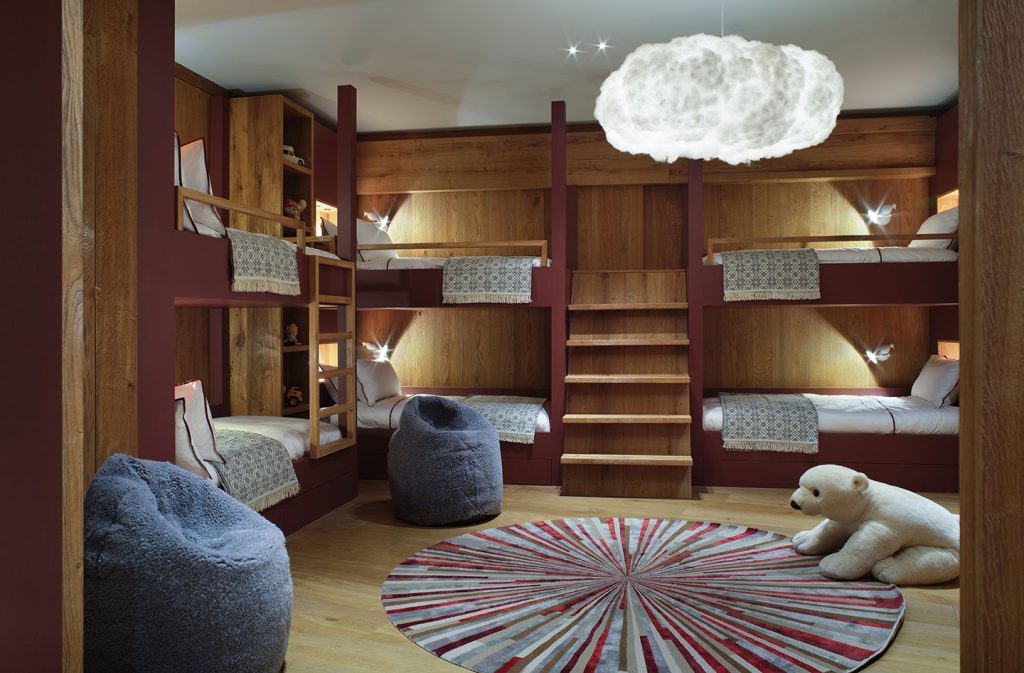
Now, with over 50 ski projects completed worldwide, Dobree is continuing to redefine mountain luxury – one of her recent projects, the extravagant, 14-bedroom Étoile du Nord in Val d’Isère, won World’s Best New Ski Chalet 2023 in the World Ski Awards and costs up to £400,000 per week to rent in high season. Less of a ski chalet and more of a private resort, Étoile du Nord reflects how the concept of luxury has been redefined over Dobree’s career. ‘Two decades ago, ski-in, ski-out access was the luxury,’ she recalls. ‘Now, the chalets are vast, and facilities rival five-star resorts. Saunas have given way to full wellness suites with pools, hammams, yoga studios, gyms and massage rooms. Outside, you’ll find fire pits, hot tubs and outdoor kitchens. I’ve even designed chalets with dog showers!’
The pandemic, she feels, accelerated this evolution: ‘Suddenly, people realised they could work from anywhere, so living in the mountains became appealing year-round, not just for the ski season. With that came a desire for a healthier lifestyle. Wellness is on every client’s agenda now. Spas and pools are grander, yoga and meditation spaces essential.’ At this level, chalet residents are not heading to the local bars for the après ski; they are unwinding in their personal health club and employing top chefs to serve their meals.
For the designer, that means ensuring that staff can do their jobs and provide the services that clients expect, while ensuring that the atmosphere retains the privacy and essence of being a home. ‘These buildings may be vast, but they must still feel intimate, private and homely, with service discreetly behind the scenes,’ says Dobree.
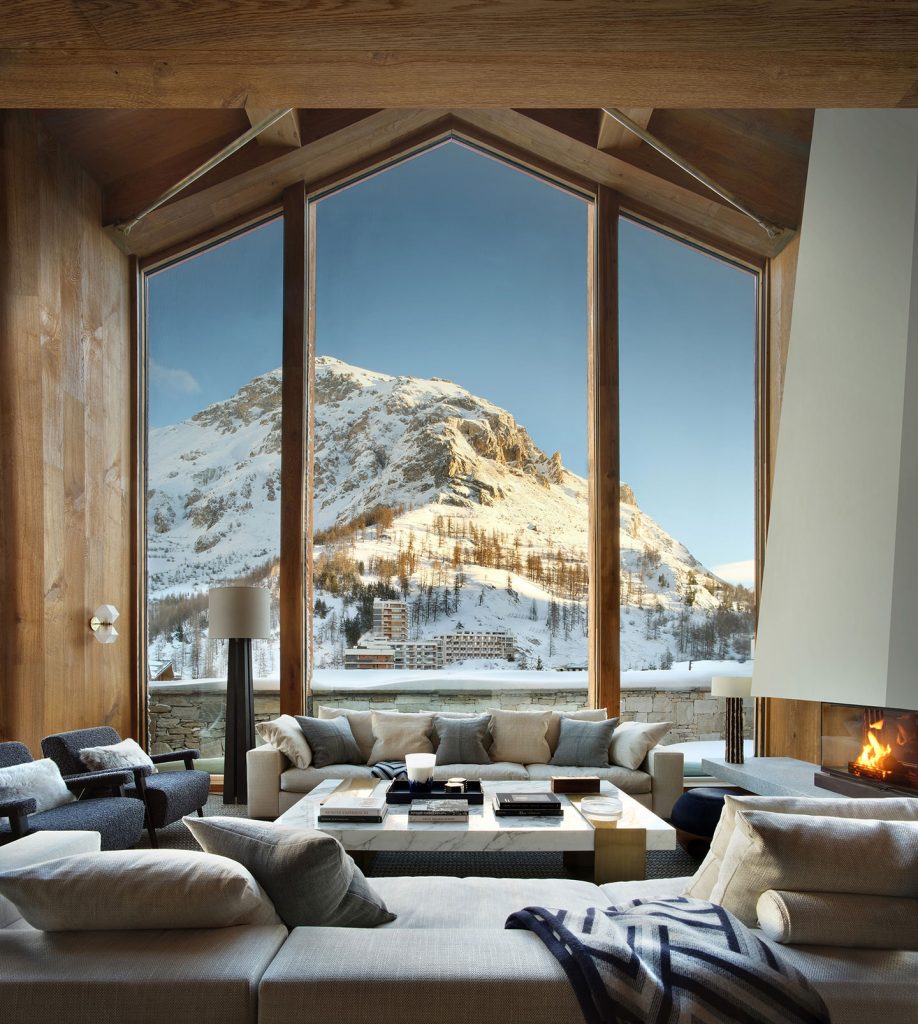
Contemporary design can also be a challenge, as the French authorities are staunchly defensive of their traditions. ‘French approval processes can be testing,’ Dobree admits. ‘They’re passionate about preserving their chalet traditions, and after 25 years, the same battles remain.’ Yet architects are pushing boundaries, reinventing the Alpine aesthetic for a new generation. At Étoile du Nord, designed by AndArchitects, for example, the pitched roof and natural timber materials honour local tradition, while the soaring glass walls and vertical fins introduce modern drama. ‘The sense of arrival is awe-inspiring,’ says Dobree.
While the kind of uber-budget projects that Dobree deals in represent the pinnacle, the push towards ever-increasing luxury can be felt throughout the ski chalet market. Andy Sturt, managing director of VIP Ski, says: ‘The word “luxury” keeps being redefined. Thirty years ago a Jacuzzi was a luxury, then it became an expectation, then it became a necessity as you couldn’t sell a chalet without one – you had to have a Jacuzzi on the terrace with a view. Now, it still says luxury to have a pool in the basement, but it’s not unthinkable that in ten years’ time you won’t be able to sell a chalet without a pool, so we are retrofitting them into some of our older chalets. People are putting in climbing walls, chutes to the lower levels, amazing wine cellars; I think it will just keep going more and more upmarket.’
Sturt has been in business 38 years, from the days when ski chalets were timber-framed Alpine barns with a shared bathroom. ‘There are a million skiers in the UK,’ he says, ‘but younger people and students are being priced out of ski holidays as everyone is chasing this elusive notion of luxury. These days a week’s skiing starts from a minimum of £2,000 a person, so someone who is taking their family away and paying that amount will be used to staying in the best hotels, so the chalet has to be at least as good.’
Today’s skiers aren’t content to hop on a shuttle bus or clomp in their boots to the bottom of the lifts – ski-in-ski-out is now regarded as essential. And as the climate warms, and Alpine snowfalls become less reliable, it is driving chalet operators further up the mountains. ‘The key component is being able to ski from the ski room door and you only get this at altitude,’ says Sturt. ‘As global warming is pushing demand further and further up the hill, there’s less space on top of a mountain and land prices are so expensive that it is driving everything inexorably upmarket.’
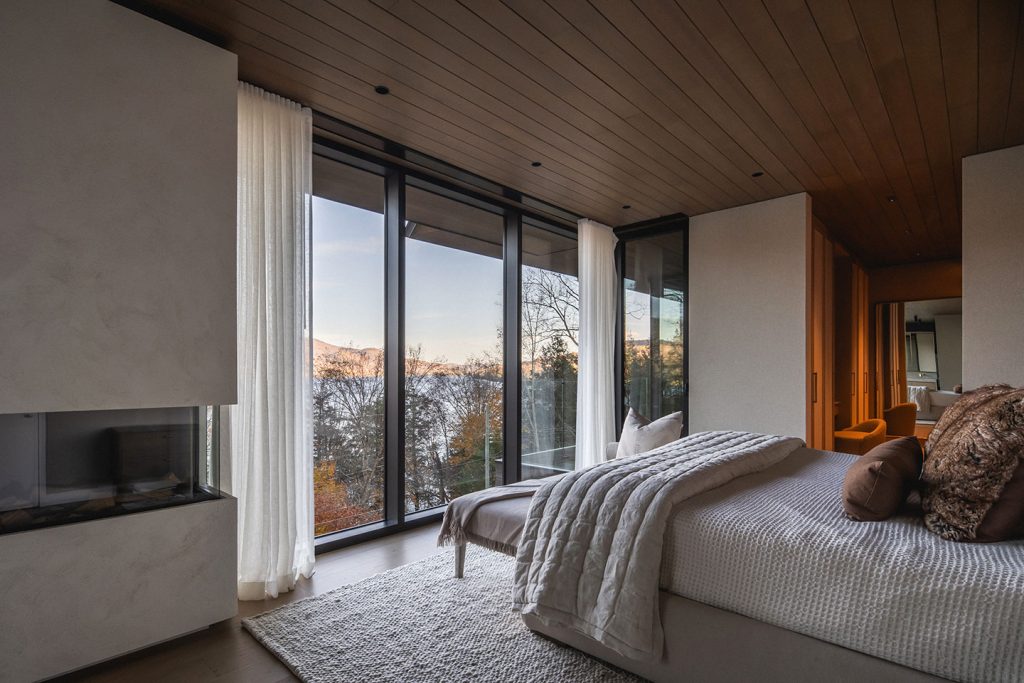
With space at such a premium, Sturt’s challenge is to fit all the comforts that people enjoy at home into a fairly compact space. Masses of storage, rain showers, glove and boot warmers, a fireplace, and first-class connectivity are all part of what he describes as ‘a thousand things that make the difference’. Contemporary design is part of that. ‘Back in the ’90s it was real wood from barns, and indoor cladding that looked slightly dingy but very charismatic. Now we mix old timber with contemporary clean white lines, like a cross between an Austrian barn and an Ibizan villa. Materials such as ceramic timber are very credible products and have helped design to evolve.’
Adam Knibb, who runs Architect in the Alps alongside his eponymous UK studio, has noticed similar trends: ‘Over the past decade, chalets have shifted from being purely rustic retreats to becoming highly sophisticated homes. Clients now expect the warmth and character of traditional Alpine architecture but with the clean lines, expansive glazing and smart technology of contemporary design.
There’s a stronger focus on blurring inside and outside – large windows framing views, terraces with fire pits, and seamless transitions to nature. Well-being has also risen up the agenda: spas, saunas, yoga spaces and daylight filled interiors are considered essentials.’
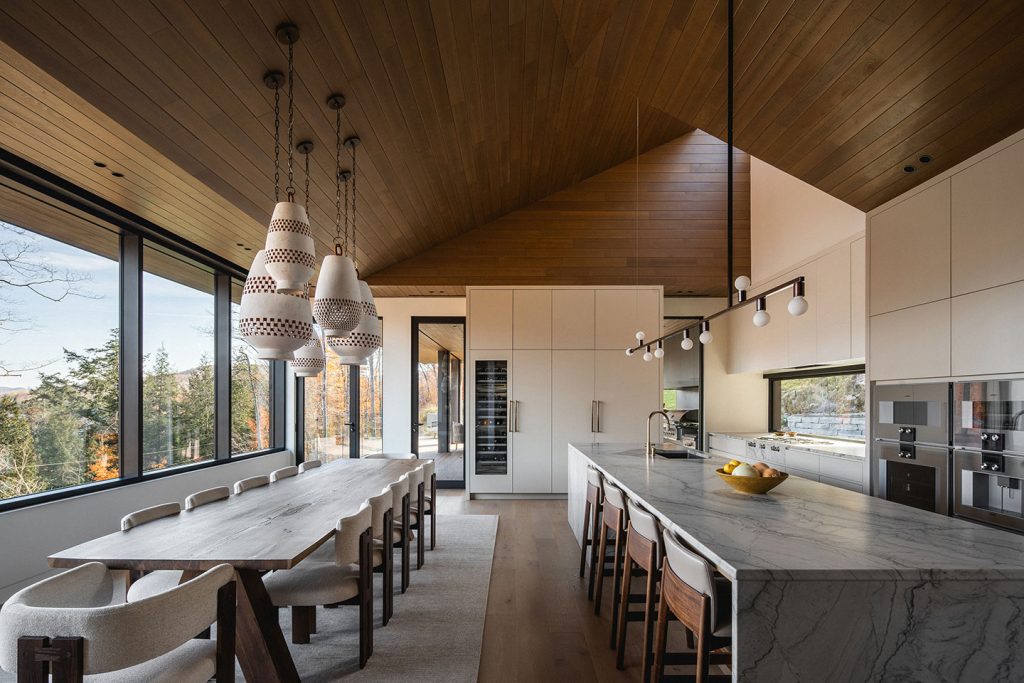
Knibb is working on a chalet in Tignes, with stone and timber cladding anchoring it within the Alpine context, while large glass windows on the first floor present a contemporary twist, and offer wide ranging views of snowy landscapes. A recently completed project in Courchevel, in association with Pasfield and Park Interiors, was a similar mix of tradition and contemporary design.
‘Overly heavy mock-Alpine aesthetics, such as dark wood panelling, small windows and cramped interiors have fallen out of favour. Clients are less interested in ostentatious, purely decorative features.
Instead, they want something authentic, refined, and responsive to its setting rather than a pastiche,’ he says. ‘We’re seeing expansive glazing to maximise mountain views, flexible living spaces that adapt to both family and entertaining, discreet technology and the use of natural, tactile materials like stone, timber and lime render, balanced with contemporary detailing.’
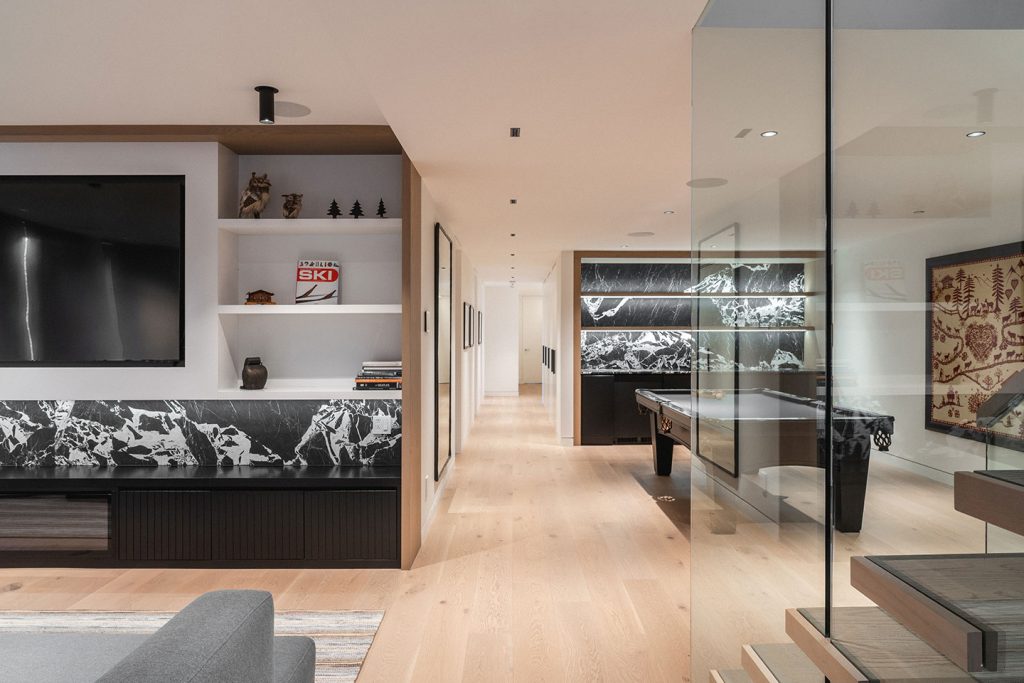
The requirement in many Alpine areas that ski chalets conform to a strictly traditional aesthetic – at odds with the desire of many clients for a contemporary design – is an ongoing challenge. Studio Razavi + Partners completed Mountain House in Chamonix, which treads that delicate line. Alireza Razavi, studio founder explains: ‘In this highly preserved Alpine valley, stringent architectural guidelines allow for little architectural freedom. Strict guidelines are enforced to protect the local heritage but that creates endless pastiche mountain homes.’ The problem was solved by relating directly to the area’s ancient building typology of stacking living areas above storage and animal barns.
Studio Razavi created a heritage code compliant building by translating this into car parking, ski room and living quarters vertically stacked. ‘This allowed us to create a progressive experience in the building, from darker, compressed spaces to gradually more open, light-filled, higher ceilings and greater views out. Celebrating nature was, of course, the pinnacle,’ says Razavi. ‘This comes as the final experience, up on the last floor, fully framing the view by extending the building envelope to the outside.’
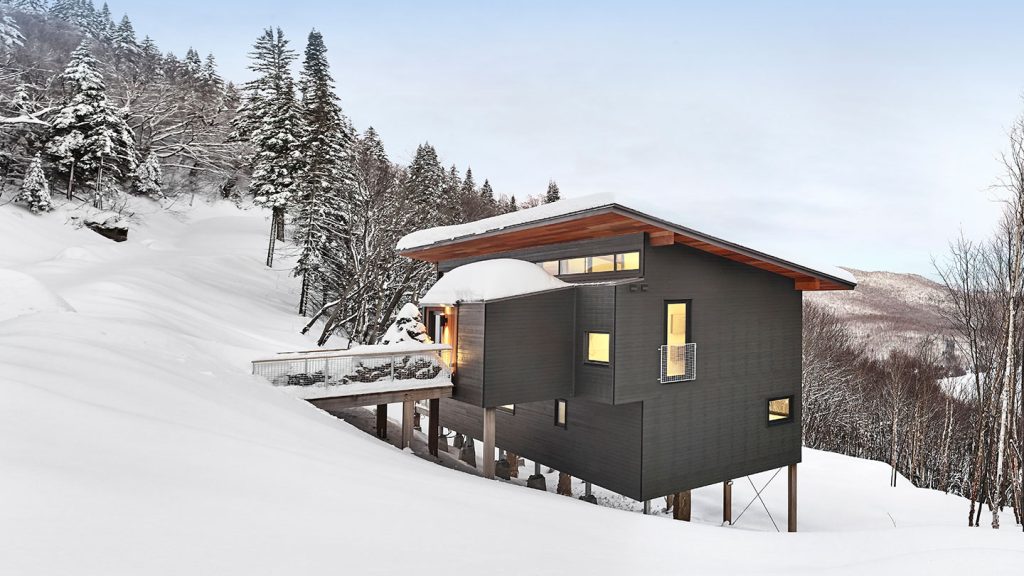
What Europeans occasionally forget, is that there are ski resorts beyond the Alps. Turn to Canada or even Australia, and you’ll find an aesthetic that merges a nod towards the European with the local vernacular. In the Laurentian Mountains of Québec, Canada, for example, both La Tierce by Atelier Boom- Town and Laurentian Ski Chalet by RobtailleCurtis are made with local cedar wood, blending into the mountain landscape, with contemporary interiors and a focus on sustainability. Similarly, at Lac-Sainte Marie near Ottowa, Shean Architects has created a ski cabin perched on natural boulders and combining a cedar porch colonnade with an asymmetrical hip roof and metal cladding. Inside, white oak floors and a wood burning stove hint at Alpine après-ski cosiness but with a contemporary twist.
MU Architecture faced strict local regulations to build La Flèche in Mont Tremblant, Québec, which meant not only using natural wood and stone to create the chalet, but evolving a design that eliminated light pollution at night. Meanwhile, in British Columbia, Openspace Architecture had the challenge of creating a luxurious, seven bedroom chalet that was the highest ever built on Whistler Mountain. Described by the architect as ‘a West Coast Modern interpretation of a Bavarian ski chalet’, Mountainscape, wrapped in a palette of stone, cedar and copper, featured every luxury imaginable, including an infinity pool.
Elsewhere, in Australia, architect Peter McIntyre was inspired by both traditional European ski chalets and Australian cattlemen’s huts as he created Dinner Plain Alpine Village in the 1980s. One home, Blairs, has recently been updated by Britt White Studio, preserving the original stone, timber and corrugated iron construction, while adding contemporary colour and texture.
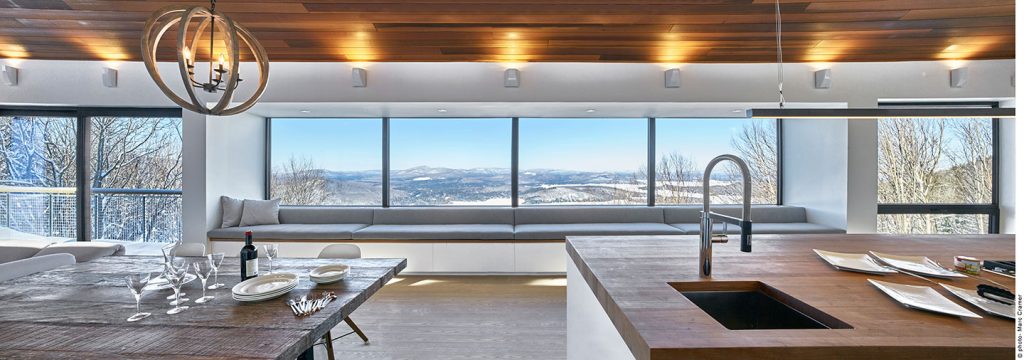
Dobree has worked on chalets across the world, and while noting the different aesthetics and priorities, believes that ultimately, atmosphere transcends geography. ‘Wherever it is – in the Alps, Canada, or Australia – it must feel like a refuge. Cosy, atmospheric, a place where you curl up by the fire surrounded by timber and nature. That’s the essence.’
In fact, there’s a case to be made that for some clients, less might actually be more. According to Knibb: ‘I think we’re at a turning point. There will always be a market for ever-bigger chalets with cutting-edge features, but there’s also a growing appetite for pared-back, restorative spaces that focus on quality of life and a stronger connection to nature.’ Which is exactly what Earthboat chalets, designed by Pan-Projects, aim to achieve. These foundation-free, transportable chalets, complete with sauna, offer the ultimate peaceful retreat in ski resorts across Japan. With the potential to move with the snow, while sitting lightly on the landscape, it’s an idea that could disrupt the race to the top in the Alps. According to Knibb: ‘The “luxury” of the future may be simplicity – a quiet, sustainable retreat that feels rooted in its landscape.’
Case Study: Étoile Du Nord Chalets
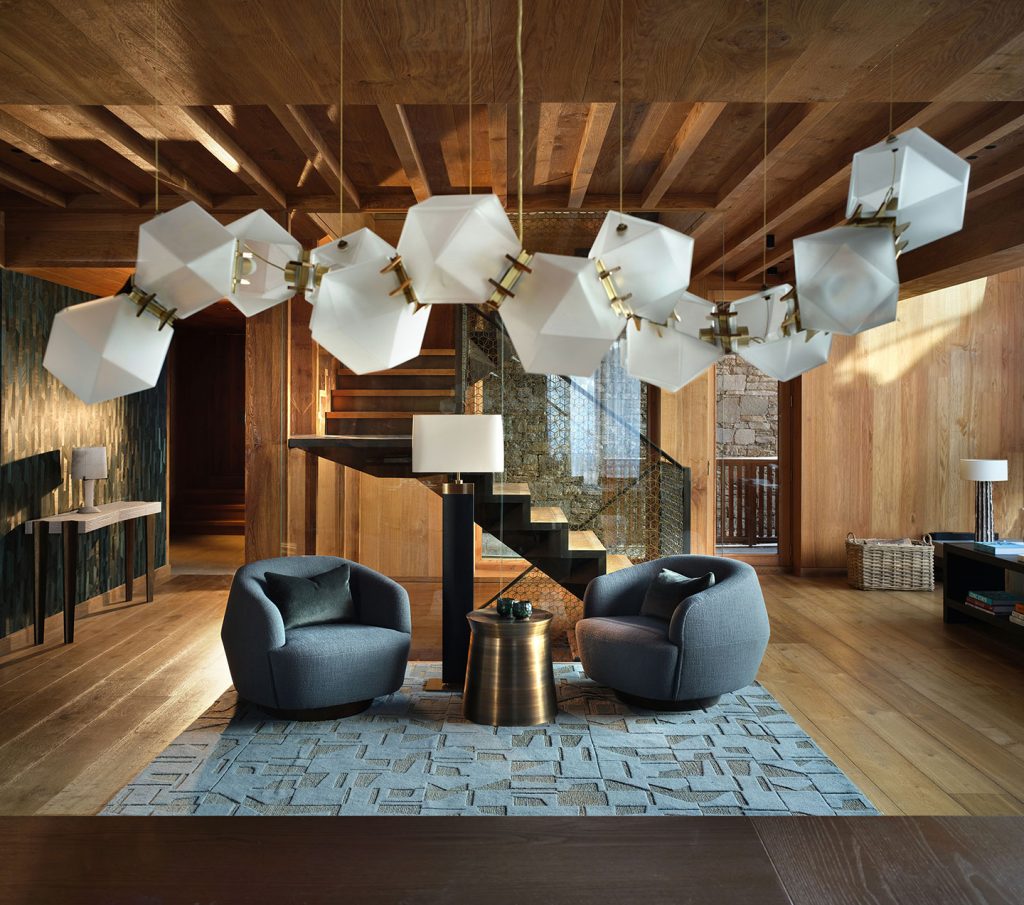
Reputed to be the most luxurious ski chalets in the world, each of the two Étoile du Nord chalets in Val d’Isère, France, has an indoor/outdoor pool, terrace hot tub, games room, cinema, hammam/steam room, massage room, relaxation area and spa. Interiors: Nicky Dobree Interior Design in collaboration with AndArchitects
Architect: AndArchitects
Case Study: La Flèche
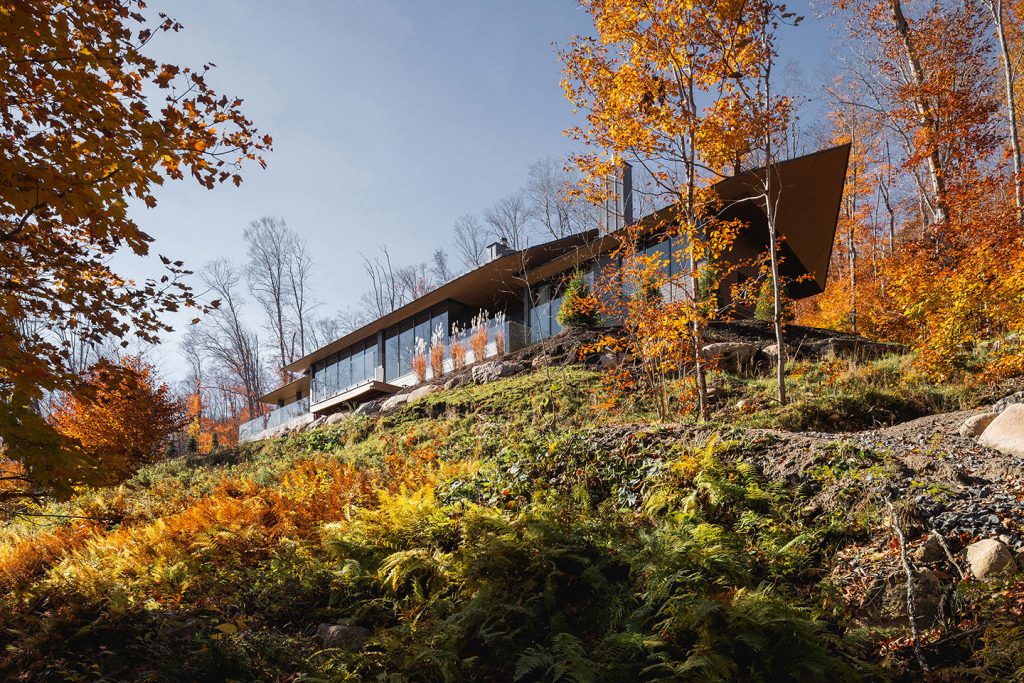
Strict environmental regulations in Mont Tremblant, Québec, meant this contemporary mountain chalet was allowed no visible outdoor lighting. Its name comes from the rooflines that evoke an arrow, while concealing a lower garden level entirely from view. The body of the house is clad in wood and dry-stacked stone, their soft tones blending with the surrounding forest.
Architects: MU Architecture
Structural engineer: Geniex
Main contractor: Groupe Laverdure Construction
Case Study: Laurentian Ski Chalet
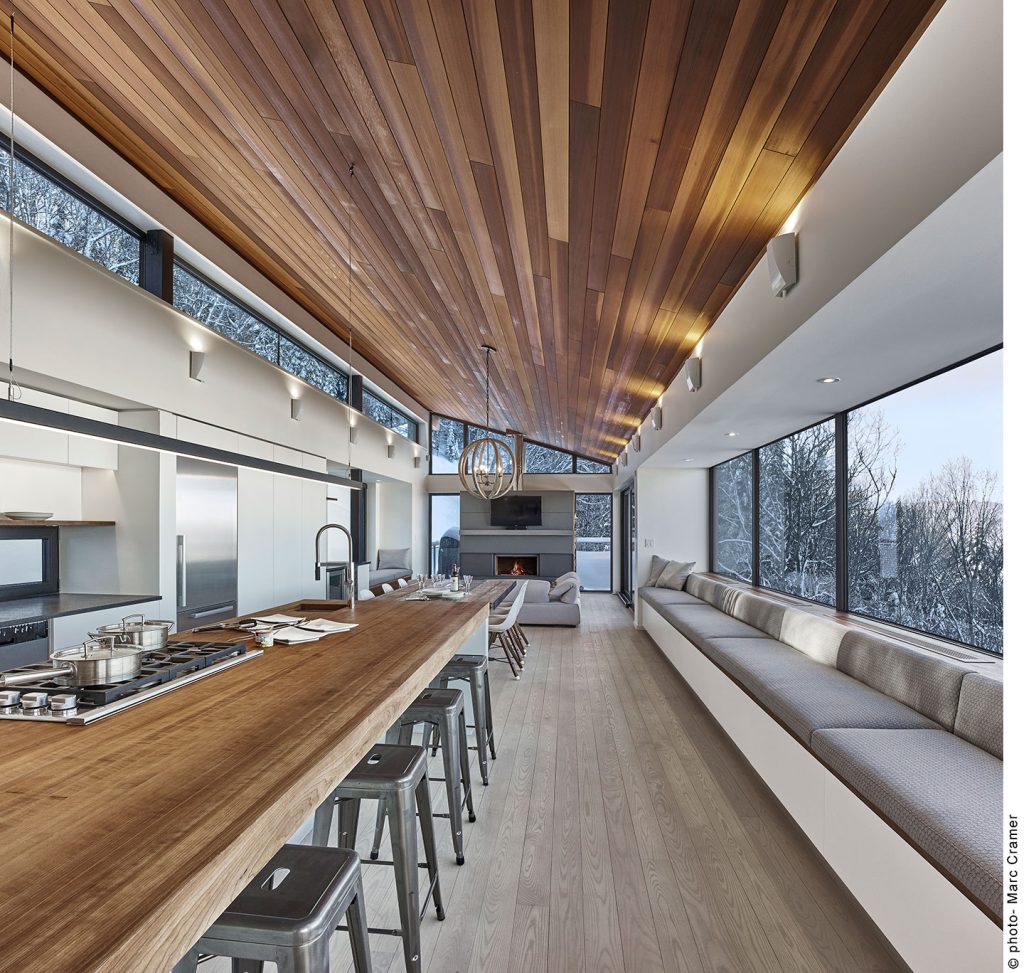
One of the highest buildings in the Laurentian Mountains of Québec, this family ski chalet has 100-mile panoramic views over Lac Archambault, enjoyed through the 27ft bay window in the kitchen/ dining room. Built on cedar stilts to limit its impact on the landscape and allow snow to melt underneath it, the entire building is clad in dark-stained cedar, with a metal roof.
Architect: Robitaille Curtis
Structural engineer: Lateral, Thibaut


