

What products, materials, requirements etc. are customers demanding currently?Across Europe and Internationally, we are seeing the same big shift: clients want workplace environments that are flexible, healthier and genuinely sustainable. This translates into three very clear expectations for furniture.
First, agile modular pieces required for hybrid work, namely lightweight desks, reconfigurable soft seating and mobile tables, and acoustic solutions that support different modes of working. Second, highly ergonomic task chairs that retain comfort during long hours of focused work. And finally, solutions that are easy to maintain and reuse when office layouts inevitably change and adjust.
On the material side, client conversations are becoming much more technical than a few years ago. They expect low-emission foams, FSC®-certified wood, durable recycled fabrics and verified certificates such as LEVEL or EPDs, demanding proof rather than ‘green’ promises.
And finally, there is a growing interest in services around the product; refurbishment, reupholstery and second life solutions that extend product life cycles and circularity and reduce carbon footprint.
What’s your biggest-selling product, and what design element is the secret to its success?
One of our consistently best-selling chair families is Xilium. It has become something of a benchmark product as it performs equally well in very different types of office environments – from large corporations to smaller, agile teams.
What clients notice first is its characteristic, clean geometry and innovative ‘X-move’ mechanism built into the construction, with a smart connection between the seat and backrest that allows for dynamic movement. Combined with a wide choice of material options that include upholstered, mesh, and duo-back, it offers flexibility for different settings.
Xilium’s secret lies in its versatility grounded in advanced ergonomics. It provides an extensive adjustment range and a movement mechanism that supports the body in many postures making one chair suitable for a broad spectrum of users. For facility managers and architects, that translates into a low-risk, high-comfort solution – a key factor that makes it our biggest seller.
How do you balance aesthetics with ergonomic function?
For us, ergonomics is never an afterthought that is ‘hidden’ under a beautiful product shell. Our design process starts from human factors; posture, body dimensions and movement patterns, aligned with the applicable standards. We then prototype until the seat feels optimal for a wide range of users. Only then do we refine the silhouette, proportions, textures, and colour palette.
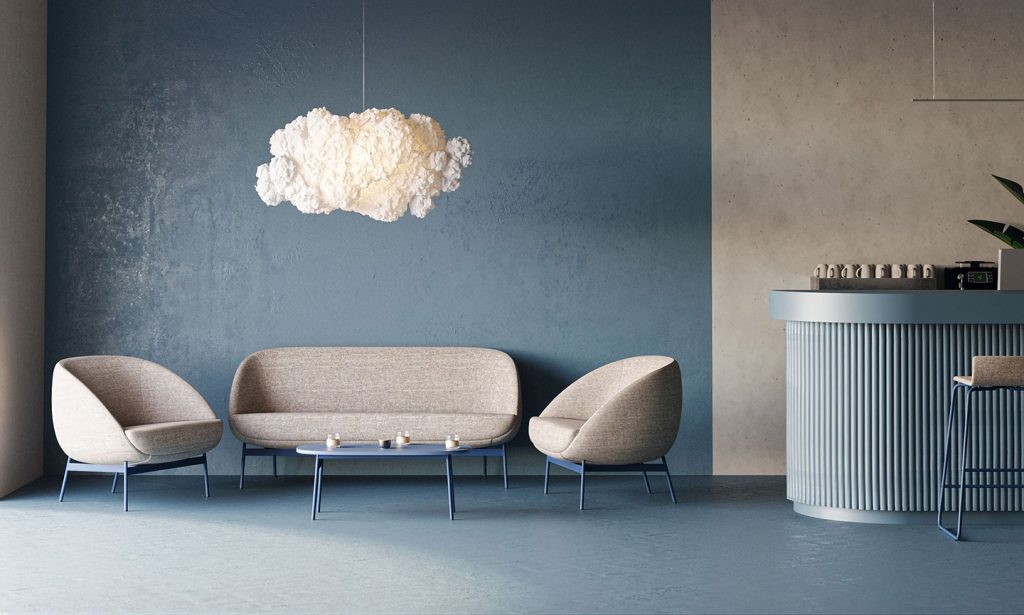
A good example is our Mollen sofa. Its soft, calm form and visually light base suggest a cozy residential piece, yet inside pocket springs provide high comfort and durability designed for the most demanding public spaces. Using technology from high-quality mattresses, each spring works independently, minimizing the transfer of movement between users and maintaining the shape over time.
This means that what looks like a welcoming, sculpted ‘cloud’ for a reception or lounge area is, in fact, a highly technical seating solution. For us, aesthetics and ergonomics are two expressions of the same design intension: long-lasting comfort and wellbeing in everyday use.
What are the challenges involved in designing products sustainably?
The first challenge is that ‘sustainable’ is no longer a label, it is a measurable performance. To design responsibly you must understand the entire life cycle of a product; from sourcing raw materials to energy usage during manufacturing, through to logistics, usage, and end-of-life scenarios. Gathering reliable data from this entire journey and feeding it back into design decisions is complex.
The second challenge is balancing competing priorities and goals. A product built to last 20 years may be heavier; a chair that’s easily repairable may require more visible fixings and a low-impact material may not exist in the colour a client wants. We have to often navigate trade-offs between impact, aesthetics, cost, and user expectations. The key is transparency: we document our choices in reports and certifications, so clients can see real effects and outcomes, not just promises.
And what are the advantages?
The advantages are both environmental and business orientated. Reducing energy use, optimizing materials, and designing for longevity directly reduce our carbon footprint; we have already reduced CO₂ emissions by around 50% compared to 2018, surpassing our original 30% reduction target for 2025. This puts us on a credible path towards our long-term goal of climate neutrality by 2050.
At the same time, sustainable design is a competitive advantage. Public and private sector clients increasingly demand clear documentation, from CSR reports to third-party certifications in tenders. Because sustainability has been embedded in our development processes and systems for years, we are able to respond quickly and with credible data. This also helps us attract employees and partners who value working with a company committed to responsibility.
How do you approach design for inclusivity and universal usability, ensuring that furniture caters to different body sizes, physical abilities etc.?
We start from the principle that there is no ‘average user’. Office furniture must support a wide range of heights, weights, postures, and abilities, often within the same organization. In practice, that means large adjustment ranges for seat height, depth, armrests, and lumbar support, plus robust load capacities, a variety of base and arm options as well as easy, intuitive controls that require no manual.
We also believe inclusivity applies to the entire workspace not only individual products, offering a mix of seating positions (from lounge to sit-stand), different acoustic conditions (open, semi-enclosed, fully enclosed), and layout varieties that are accessible for people using mobility aids.
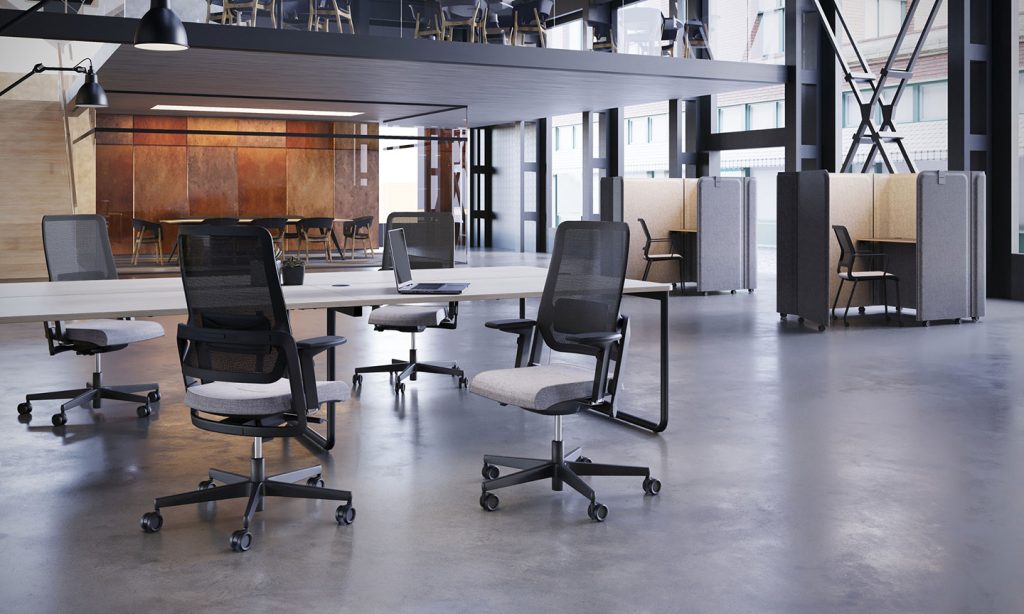
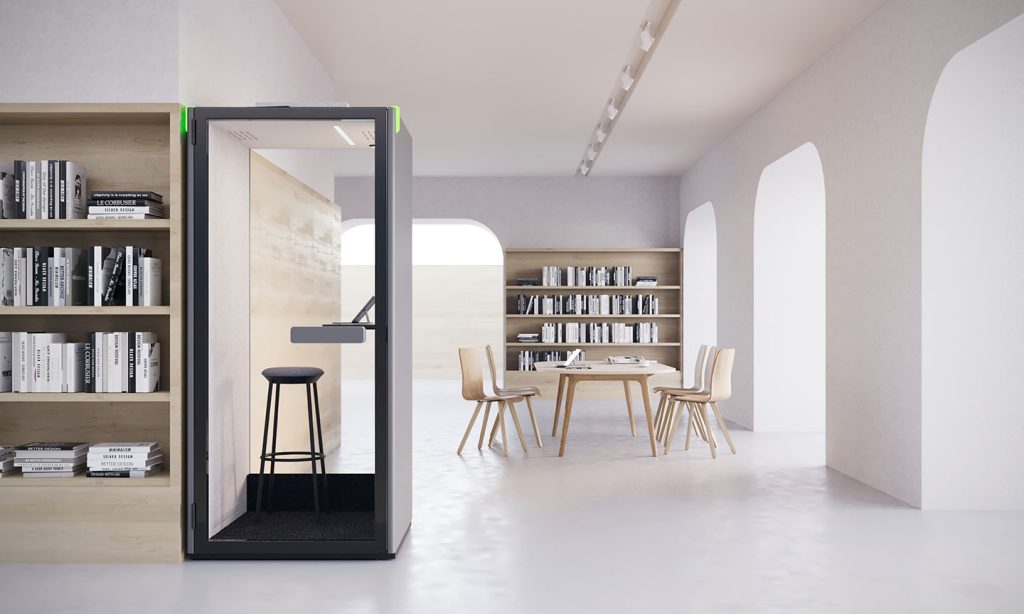
This thinking inspired our SPIX acoustic pods, which create enclosed, comfortable micro-environments for focused work, calls, or online meetings. They reduce sensory overload and give users more control over noise and privacy—especially valuable for those sensitive to sound or need calmer conditions to perform at their best.
How do you select which external designers to collaborate with (for example, Brodbeck-Koepp Design)?
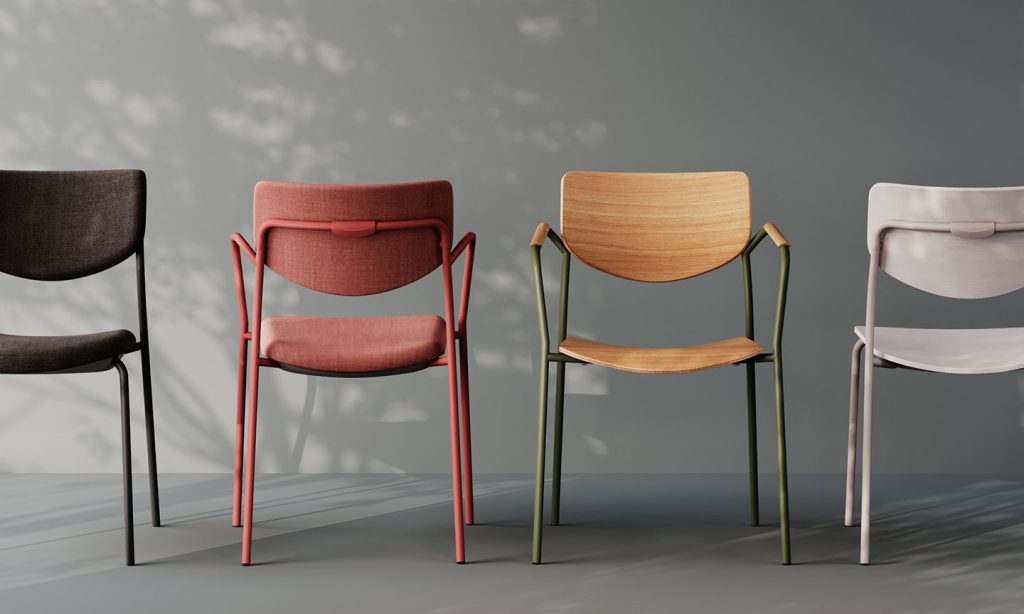
We partner with external designers whose design philosophy aligns with our strategic direction as a manufacturer. With Brodbeck-Koepp Design, for example, there is a strong shared belief in ‘design based on people’; solutions that are simple, friendly, and emotionally positive, yet underpinned by serious ergonomic thinking. Together, we have created products that include the Smile chair and Genaya seating system, combining soft, human forms with strong functionality for the office workplace.
When choosing partners, we look for curiosity about new ways of working, sensitivity to sustainability, and a willingness to collaborate deeply with our in-house engineers and technologists. The best results come when there is no ‘star designer’ on one side and ‘supplier’ on the other – just one team focused on solving problems in a beautiful, intelligent way.
Is AI starting to influence how you develop and design products? If so, how? And if not, why not?
We are actively exploring AI in selective and very controlled scenarios. At this stage we are testing different tools and scenarios, such as early concept visualizations, trend and data analysis, and internal process support – rather than rolling out AI broadly across our product development.
Our priority is to identify where AI genuinely adds value without compromising quality, safety, or accountability for the decisions we make. We purposely run pilot projects in small interdisciplinary teams, measure the results and only then decide whether a given approach should be scaled up. Equally important, we see AI strictly as an assistant, not a designer. Decisions about ergonomics, materials, sustainability, and the emotional experience of a space remain in human hands. The role if AI is to help our experts work smarter and faster, not to replace their knowledge and intuition.
Which design trends will have the most impact on the market over the next five years?
We expect several trends to strongly shape and influence office furniture in the coming years. First, hybrid and activity-based work will keep driving demand for flexible, modular systems, from soft seating and tables to acoustic pods, allowing offices to adapt and transform quickly without constant renovations.
Second, the ‘soft office’ will continue to gain momentum, creating spaces that feel more like hospitality or residential interiors, with warmer colours, softer products, and biophilic elements. Third, wellbeing and acoustic comfort will shift from ‘nice to have’ to fundamental, as companies compete for talent attention and retention and aim to create genuinely better work experiences.
Finally, circularity will become a defining principle trend: creating products that are designed to last longer, to be easily repaired, reconfigured, and ultimately disassembled into clean material streams. Clients will increasingly ask not only how a product looks and feels—but what happens at the end of its life—and they will expect a well-designed answer
Nowy Styl (www.nowystyl.com ) is a European leader in comprehensive furniture solutions for offices and public spaces. Based in Poland it delivers a comprehensive interior arrangement service based on the analysis of specific needs: work organisation, desired effectiveness as well as ergonomic and acoustic aspects. With branches in 11 countries, the brand presents its solutions and know-how related to office arrangement in the Office Inspiration Centre in Kraków as well as in 28 showrooms in locations such as London, Paris, Warsaw, Munich, Prague and Budapest.


