


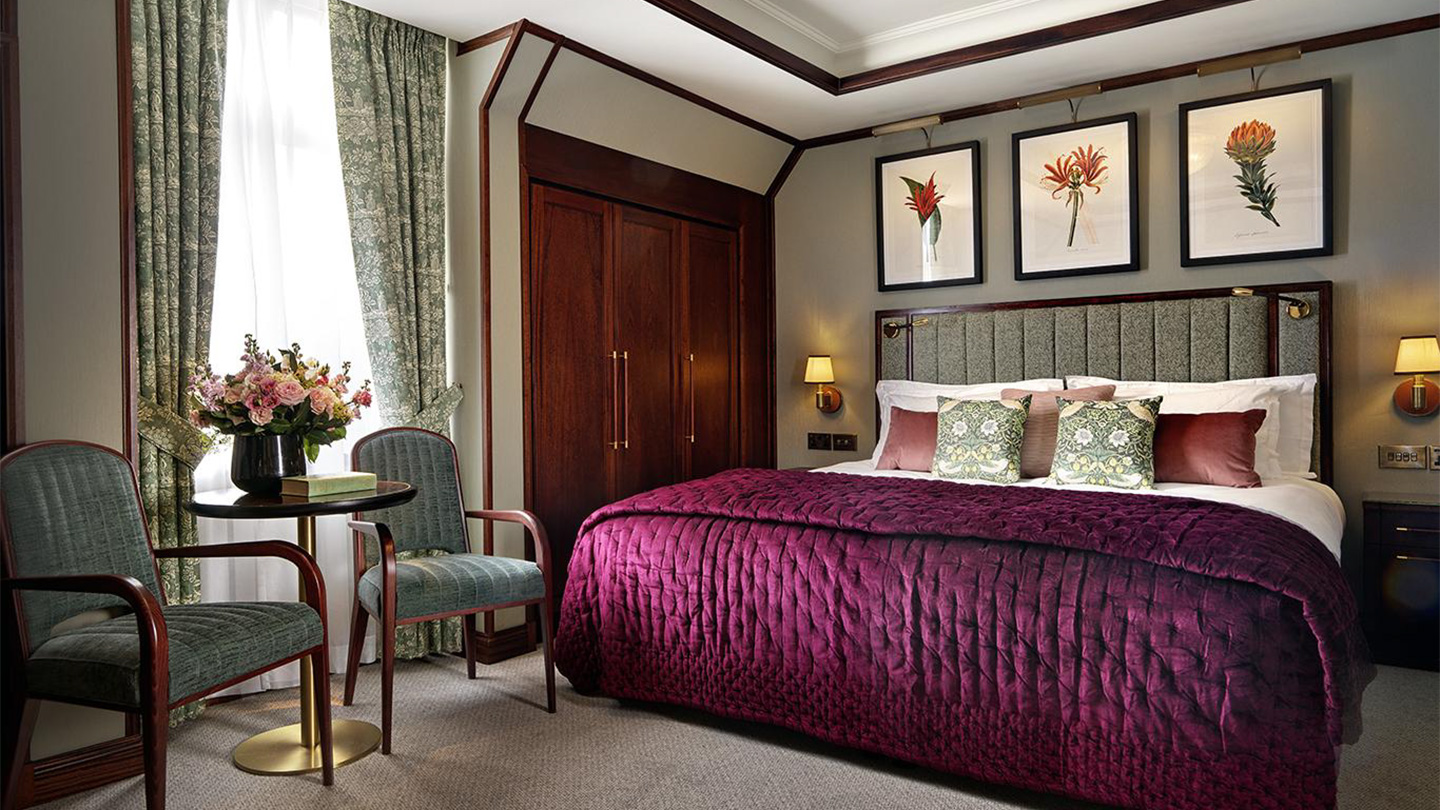
Walk into a hotel bedroom and, consciously or not, your eye goes straight to the bed. But linger a moment longer and it’s the headboard that does the real work. It frames the room, sets the tone, and quietly communicates what kind of stay this is going to be. Calm or characterful. Understated or indulgent. Contemporary or rooted in history.
For designers, headboards have become one of the most effective ways to inject identity into hotel bedrooms without overwhelming the space. As new rooms get smaller and schemes more restrained, there’s less appetite and less room for decorative clutter. The headboard, positioned at eye level and experienced up close, offers a single, confident design gesture that can carry the emotional weight of the room.
Where the room begins
In many hotel projects, the headboard is one of the first elements designers look at. Its scale and proportion influence almost everything that follows, such as, bedside furniture, lighting positions, even how generous the room feels. Extending the headboard beyond the width of the bed, or taking it full height, can visually anchor the space and introduce a sense of architectural intent, particularly in compact footprints.
Rather than being treated as a piece of loose furniture, headboards are increasingly thought of as part of the room’s structure and as a unifying backdrop that gives order and clarity to the bedroom’s layout.
Character without clutter
Hotel bedrooms sit in a delicate space between capturing the hotel’s personality and being a space to relax. Guests want to feel a sense of place, but not visual overload, especially in a room designed for rest. The headboard provides designers with a controlled canvas to introduce character without compromising tranquillity.
Texture, depth and materiality often do more work than colour alone. Upholstered panels, subtle patterning, fluting or tailored stitching allow designers to layer interest in a way that feels intentional rather than decorative. It’s a way of “saying more with less”, a single design move that carries the scheme.
This approach is particularly relevant in heritage settings, where overt references can quickly feel heavy-handed. For example, at The Stafford, headboards play a crucial role in bridging old and new.
The above example is framed in a deep mahogany wood finish. You can see that the headboard brings warmth and a sense of permanence to the room. A subtle, delicate sheen on the wood edging, lifts the grain, while upholstered panels soften the design at eye level. Finished in a Clarence House Italian woven herringbone fabric, the texture adds depth though its rich tactile qualities. It’s a combination that feels calming, grounding the space and inviting guests to settle in.
Behind that calm presence is a practical consideration that needed to be thought about during the design phase. For this Mayfair hotel, just moments from Buckingham Palace, access was a key consideration. Tight corridors and stairs meant the headboard was designed in two sections, allowing it to be brought on site and assembled seamlessly. The central join is discreet and virtually invisible once installed, a reminder that good design often lies in the details guests never notice, but always benefit from.
Function, without the fuss
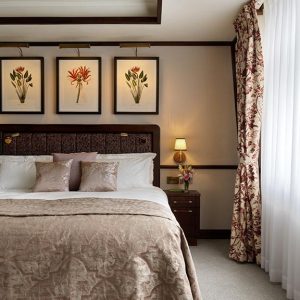
Behind their visual simplicity, many contemporary hotel headboards integrate technology, for example, lighting, concealed power or switches are now commonly built into headboard systems.
For designers, the challenge lies in solving these requirements without visual noise. The most successful headboards absorb function seamlessly, allowing the room to remain calm while meeting modern expectations.
“The best hotel headboards hide complexity and make it look effortless.” Design Team at Inside Out
A quiet shift in focus
As hotel rooms become more streamlined and layered decoration falls away, headboards are carrying more responsibility than ever. They anchor the room, shape perception and quietly define character, proving that sometimes, the most powerful design decisions are made right behind the pillow.
“In an era of pared-back hotel rooms, the headboard carries more responsibility and more opportunity, than ever before.” Design Team at Inside Out
Explore more approaches to bespoke headboard design at Inside Out Contracts. https://insideoutcontracts.com/products/headboards-beds